UGC Strategy10 min read
UGC Rates in 2026: What Creators Charge and What Adds Cost
What UGC creators charge per video in 2026, from marketplace data, plus what usage rights, exclusivity and rush delivery add, with a rate calculator.
Short answer:
- On Collabstr, UGC creators listed their packages at $180 on average, and brands paid $154 on average per UGC deal, based on 472,000+ packages and 21,000 collaborations in its 2026 report.
- That's the base price for making the video. Running it as an ad usually costs more: one agency's guide puts paid usage at 20 to 30% extra for 3 months and 30 to 50% for 12 months, and perpetual rights at 100 to 150%.
- Follower count matters far less than for influencers. Experience, niche, how complex the video is and how you'll use it set the price.
- Platforms that bundle the rights start around $99 a video, agencies around $160 to $300, and AI tools cost a few dollars per short video.
"How much does UGC cost?" gets answers from $50 to $3,000 a video, and both ends are real. The spread comes from what's in the quote: one organic video for a brand's feed is a different job from a video you'll run as an ad for a year. This guide uses marketplace data instead of opinions, breaks down the add-ons that move the price, and has a calculator to estimate a quote before you ask for one. We're a UGC tool ourselves, so where AI fits, we say where it doesn't too.
What UGC creators charge in 2026
The largest public dataset we found is Collabstr's 2026 Influencer Marketing Report, which analyzed "472,000+ packages and 21,000 collaborations" on its marketplace. It separates what creators ask from what brands actually pay:
| Content type | Average listed price | Average paid |
|---|---|---|
| UGC | $180 | $154 |
| TikTok post | $182 | $186 |
| Instagram post | $214 | $193 |
| YouTube video | $311 | $255 |
Source: Collabstr 2026 report, data from 2025. Checked October 11, 2026.
Two more numbers from the same report put this in context. The average cost of a UGC campaign on Collabstr fell from $209 to $197 year over year, and UGC grew from 15% to 35% of all campaigns on the platform. More creators are offering UGC, and prices are drifting down rather than up.
These are averages from one marketplace, where many creators are newer and deals are small. Collabstr says 80% of its influencer campaigns come in under $300. Rate guides that cover experienced creators quote much wider ranges: JoinBrands says "a beginner might charge $200" and "an established creator might charge $2,000" (JoinBrands), and Insense puts the range at "$50 to $3,000+" per piece (Insense).
Why one video costs $150 and another $1,500
Follower count isn't the main driver. Brands pay UGC creators for the video, not for posting it to an audience, so a creator with 2,000 followers and a strong portfolio can out-earn one with 50,000. Insense puts it plainly: the pricing variation "has almost nothing to do with the creator's follower count."
What does move the price:
Experience and proof. A creator who can show ads that ran and worked charges more, and usually writes their own hooks and scripts. Newer creators are cheaper but need a tighter brief.
Niche. Insense notes that finance, SaaS and healthcare creators "can command a 20-100% premium over base rates," while crowded niches like beauty and fashion stay cheaper. Explaining software on camera is a rarer skill than holding a lipstick.
What's being filmed. An unboxing in the creator's kitchen is quick. A before-and-after over two weeks, a specific location or a script with several scenes takes days.
Deliverables. A single 30-second video costs less than one video plus three alternative hooks, raw footage and a 9:16 and a 1:1 cut. Extra hooks are worth paying for: they're the cheapest way to test openings, and our hook rate guide explains how to judge them.
Usage rights: the biggest price driver
The base rate usually covers organic use: posting the video on your own social accounts and website. Running it as a paid ad is a separate right, and creators charge for it because a winning ad can run for months.
inBeat, a UGC agency, publishes typical usage fees as a share of the base rate (inBeat):
| Usage | Added to the base rate |
|---|---|
| Organic social and website | Usually included |
| Paid ads, 3 months | +20 to 30% |
| Paid ads, 6 months | +25 to 40% |
| Paid ads, 12 months | +30 to 50% |
| Perpetual (any channel, forever) | +100 to 150% |
JoinBrands quotes similar numbers: +25 to 40% for "all paid channels, 6-12 months" and +50 to 100% for unlimited perpetual rights. Neither is a standard everyone follows, but most creators price in this range.
Whitelisting (running ads from the creator's account) and TikTok Spark Ads codes are priced the same way, as a fee for a set period. One agency we checked charges 40% for 90 days of paid rights with renewals at 25% per extra 90 days; our Spark Ads guide covers how codes and authorization periods work.
The cheapest mistake to avoid is buying organic rights and then running the video as an ad. Say in the brief where the video will run and for how long, and get it in writing.
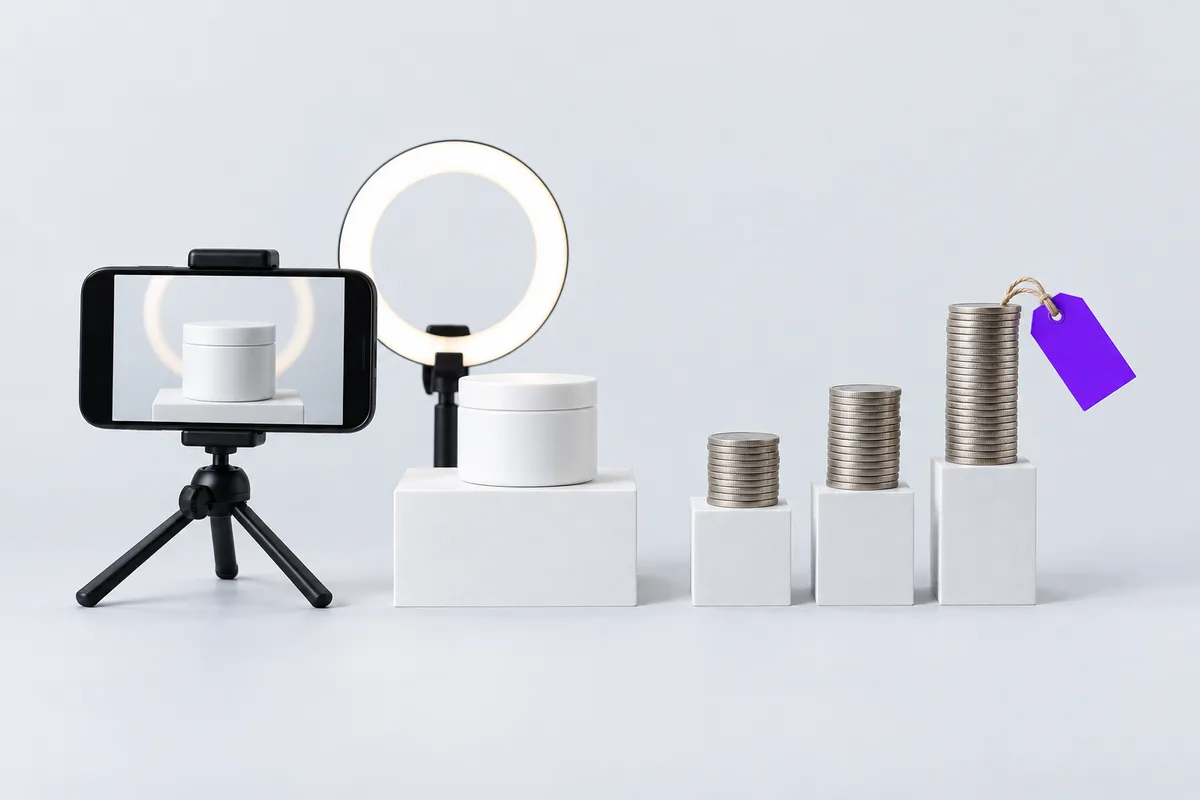
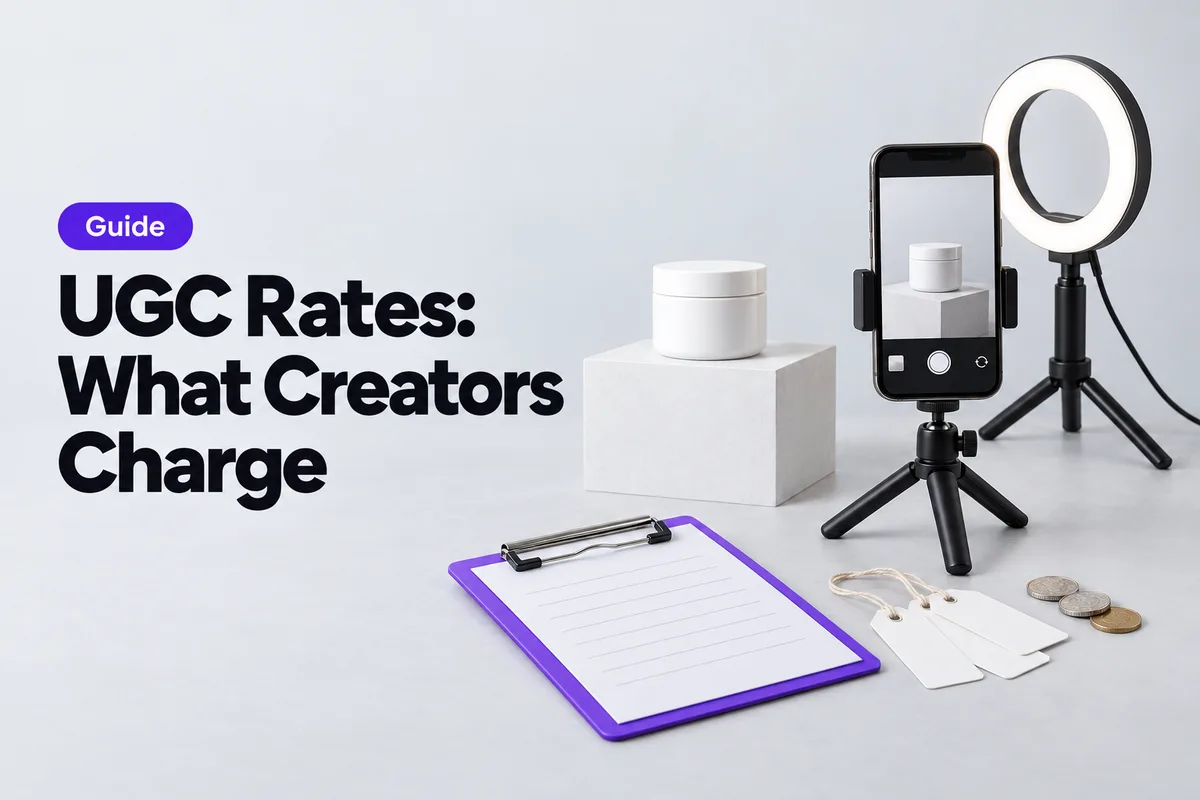
The video is the base price; usage rights and extras stack on top. Illustration generated with AI.
Other add-ons that change the quote
JoinBrands lists the other common extras (JoinBrands):
| Add-on | Typical price |
|---|---|
| Exclusivity in your industry (3 to 6 months) | +30 to 50% |
| Full exclusivity | +100% or more, rare |
| Rush delivery (48 hours instead of 5 to 7 days) | +25 to 50% |
| Extra revision rounds (after 1 or 2 included) | $50 to $200 per round |
Exclusivity is worth paying for only if a competitor using the same face would actually hurt you. For most small brands it isn't.
UGC rate calculator
Use this to estimate a creator's quote before you send a brief. It applies the add-on ranges above to the base rate you enter.
UGC rate calculator
Estimate what a creator will quote once usage rights and extras are added.
Estimated total
$563 – $630
- Per video:
- $188 – $210
- Add-ons on top of the base:
- $113 – $180
For comparison, 3 AI UGC videos of 5 seconds on UGC Builder use 60 credits.
For example, three videos at a $150 base rate with 6 months of paid usage come to $188 to $210 per video, or $563 to $630 in total. Add rush delivery and the range rises to $225 to $285 per video.
| Base rate | Videos | Usage | Extras | Estimated total |
|---|---|---|---|---|
| $150 | 3 | Ads, 6 months | None | $563 to $630 |
| $150 | 3 | Ads, 6 months | Rush | $675 to $855 |
| $300 | 2 | Perpetual | None | $1,200 to $1,500 |
Creator, platform, agency or AI: cost per video
A freelance creator isn't the only way to get UGC, and the price per video changes a lot with the route:
| Route | Price per video | Ad usage rights |
|---|---|---|
| Freelance creator via a marketplace | $154 average paid on Collabstr | Usually extra (see above) |
| Creator platform (Billo) | From $99 | Included once you approve the video |
| UGC agency | About $160 to $300 | Varies; some charge extra |
| AI UGC (UGC Builder) | About $0.65 to $1.80 for a 5-second video | No creator usage fee |
Sources: Collabstr, Billo ("Billo videos start at $99 per video," prices as of October 2026), our UGC agency price check, and UGC Builder pricing. Checked October 11, 2026.
The AI figure is what a credit costs on our plans: a 5-second UGC video uses 20 credits, the $9 Starter plan includes 100 credits a month and the $39 Ultra plan 1,200. It's the cheapest route by far, and it's the right one for testing angles and hooks at volume. It's the wrong one when you need a real person using your product on camera, a creator's audience, or a testimonial from an actual customer. Many brands use both: test with AI, then pay creators to film the angles that won.
How to get a fair quote
Creators who've been at it a while don't price from a fixed card. In an r/UGCcreators thread about rates, one creator explained:
"My floor per video right now is around $700, but that's dependent on usage, paid or organic, length, style of editing, repurposing, exclusivity, whitelisting, etc... Seasoned creators price projects by scope."
A comment on r/UGCcreators
So give them the scope up front. A brief that gets an accurate quote the first time says how many videos and how long, the hook and the main message, whether you need extra hooks or raw footage, where the video will run and for how long, any exclusivity, and the deadline. Bundles are where you save: ordering several videos over a few months typically earns a per-video discount, and JoinBrands puts it at 10 to 15%.
Pay attention to what's included, not just the headline price. A $120 video with 12 months of ad rights is cheaper than a $90 video plus a 50% usage fee. And if you're new to working with creators, start with our guide to what UGC is and how disclosure works.
FAQ
How much do UGC creators charge per video?
On Collabstr, the largest public dataset, UGC creators listed packages at $180 on average and brands paid $154 on average. Experienced creators charge several hundred to a few thousand dollars per video, depending on niche, complexity and usage rights.
How much should a beginner UGC creator charge?
Marketplace averages of $150 to $200 per video are a realistic starting point for a beginner with a small portfolio. Charge separately for paid ad usage, and raise your rate as you collect ads that ran.
Does follower count affect UGC rates?
Much less than for influencer posts. Brands pay UGC creators for the video, which usually runs on the brand's own accounts or ads, so portfolio and experience matter more than audience size.
How much do usage rights add to a UGC rate?
Published guides put paid ad usage at about 20 to 30% of the base rate for 3 months, 30 to 50% for 12 months, and 100 to 150% for perpetual rights. Organic use on the brand's own channels is usually included.
Is AI UGC cheaper than hiring creators?
Yes, by a wide margin: a short AI UGC video costs a few dollars or less, against $100 or more for a creator video. It's best for testing hooks and angles at volume, while real creators are better for authentic product use and testimonials.
- UGC
- UGC Pricing
- UGC Creators
- AI UGC
- Video Ads