Brand Strategy12 min read
Vibe Marketing in 2026: A Practical Guide With Real Examples
What vibe marketing is, why feeling-first content works, brands doing it well, and a step-by-step plan to test it with AI tools in 2026.
Key takeaways:
- Vibe marketing means making people feel something about your brand before you explain what you sell. Mood, tone and authenticity come before features.
- It works because people decide with emotion first and justify with logic afterwards, and because feeds reward content that doesn't look like an ad.
- AI tools make it practical: you can produce many creator-style variations of one idea, test which feeling lands, and scale the winner.
- Pick one emotional "archetype" that fits your brand, stay consistent, and measure saves, shares and sentiment alongside clicks.
"Vibe marketing" has gone from a meme to a phrase you hear in planning meetings. Some of it is hype. The useful part is simple: brands that pick a clear emotional tone and produce lots of content that fits it tend to stand out in feeds full of generic ads. This guide covers what it is, why it works and how to try it without a big team.
Not everyone is convinced. In an r/marketing thread asking whether vibe marketing is a real shift or a passing trend, a skeptical commenter asked what actually separates it from brand marketing. It's a fair question, and our answer is speed and volume: making a lot of on-tone content quickly and testing which feeling lands.
"Can anyone describe an actual difference between brand marketing and vibe marketing? It sounds very much just like brand marketing without following traditional best practices."
A commenter on r/marketing
What is vibe marketing?
You're scrolling and you stop. Not because of a "BUY NOW" banner, but because the colors, the voice and the feeling of a post fit you. That's the vibe.
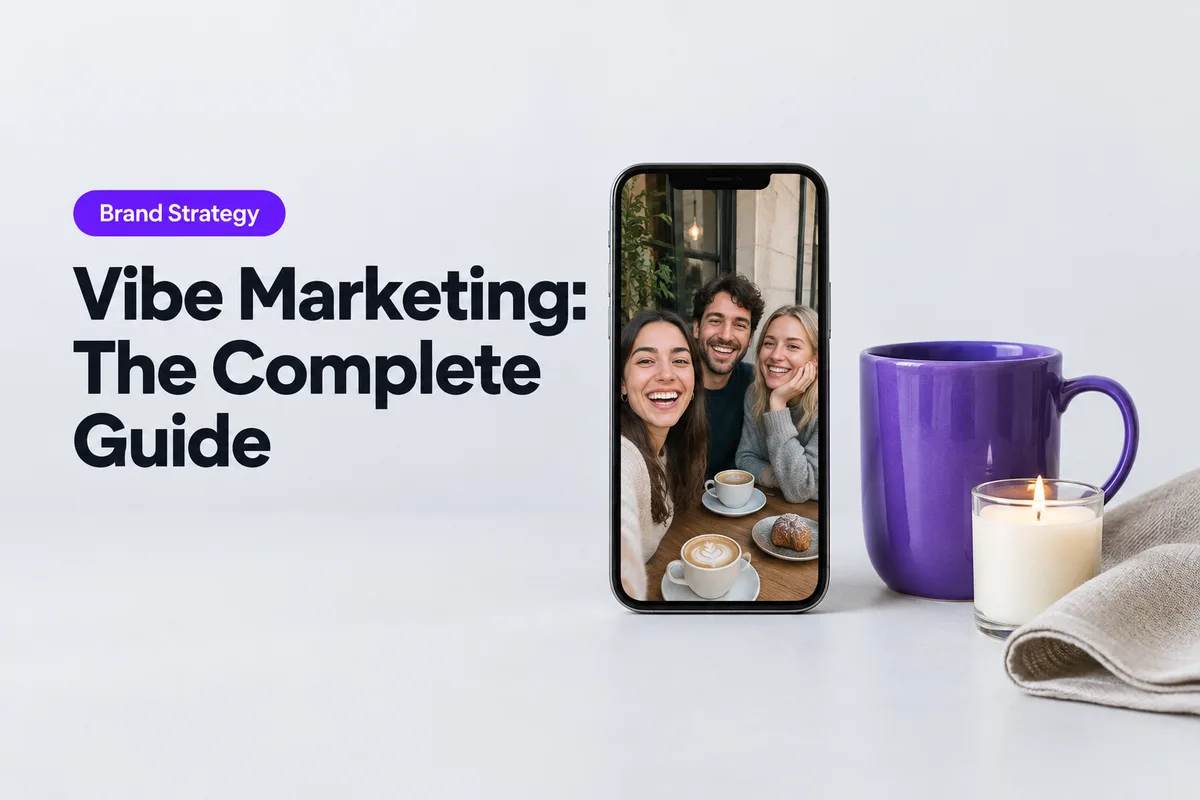
Vibe marketing is making people feel something before you tell them what you're selling. It's emotional marketing adapted to short video, creator content and AI tools. Instead of listing features, the brand says, in effect: "We get you. Want to hang out?"
What's new in 2026 is speed. With AI you can turn an emotional brief like "nostalgic but modern" into dozens of content variations in an afternoon, post them, and see which one people respond to.
Two meanings of the term
If you search for vibe marketing, you'll find a second definition. In early 2025 Andrej Karpathy coined "vibe coding" for building software by describing what you want to an AI and letting it write the code. Founders and marketers, Greg Isenberg among them, borrowed the idea: you describe the outcome in plain language ("win back customers who haven't ordered in 90 days") and AI tools draft the emails, ads and posts, then you review and ship.
If you want to see this AI-agent version in action, Greg Isenberg has a vibe marketing tutorial on how he uses AI agents.
The two fit together. The workflow version is about how you produce marketing; the feeling version is about what it should do to the viewer. A fast workflow with no clear tone just makes generic content faster. This guide focuses on the feeling and uses the AI workflow to get there.
Why the traditional process struggles
The classic campaign process was built for TV and print. A brief goes out, concepts come back, and approval rounds eat weeks. By launch day, the cultural moment the idea was built around has often passed.
Each new variation also needs a designer, a copywriter and an editor, so most brands only test two or three versions of an ad. Ads wear out fast on social platforms, and a slow team can't replace them in time. And because the process starts from a product brief, the ads explain features without giving anyone a reason to care.
Vibe marketing flips this. A small team sets the emotional direction, uses AI to produce variations quickly, and lets real engagement decide what stays.
Why it works
Behavioral research has long shown that people react emotionally first and build a rational explanation afterwards. You remember how a brand made you feel long after you've forgotten its feature list.
The colors, music, faces and tone of a video register before anyone reads the caption, and that feeling gets attached to the brand. Later, logic steps in to explain a choice the person already leaned toward: "it's better quality anyway."
Feeds amplify this. People scroll fast and skip anything that looks like an ad, so content that feels like it came from a friend or a real customer gets more attention. That's why UGC-style video is the natural format for vibe marketing. For where UGC is heading this year, see our UGC and AI marketing trends for 2026.
How it works in practice
Picture a small snack brand launching an organic version of a classic cereal bar. The old way, a brief circulates for two weeks, an agency returns three concepts, and one polished video goes live six weeks later. If it flops, there's nothing else ready.
The AI-assisted version is a loop you can run every week:
- Set the emotional direction yourself. For the cereal bar: "This should feel like finding your favorite childhood snack, except now it's organic."
- Generate variations. A tool like UGC Builder's UGC Video turns one product photo into several short, selfie-style videos. One opens with "I haven't had one of these since I was nine," another with "okay, I checked the label this time."
- Test feelings, not just headlines. Run the variations side by side on the same budget and compare saves, shares and comments, not only clicks.
- Scale the winner. Make more content in the tone that worked and retire the rest.
One marketer with the right tools can now test ideas that used to need a whole agency. Whether it pays off still depends on the idea and the product.
A simple vibe marketing tool stack
You don't need many tools. For the content itself, UGC Builder makes creator-style UGC videos and photos from a product photo, and it can build product landing pages in the same tone so the ad and the page feel like one experience. The AI Agent helps you plan and generate a batch of variations, and everything also works from inside ChatGPT and Claude. Plans are monthly subscriptions from $9/month (pricing).
For copy, ChatGPT or Claude work well if you describe a feeling rather than a quality. "Write compelling copy" gets you generic ad text. "Write this like someone who just found their new favorite thing and can't wait to tell their best friend" gets you something a person might actually say. Midjourney or another image model helps with moodboards.
The rest is plumbing. Make or Zapier can post approved content or send new reviews to a spreadsheet, and a Notion page keeps your vibe guide, briefs and results in one place. A listening tool such as Brandwatch shows the words people use about your brand, and your ad platforms' reporting compares variations by saves, shares, watch time and conversions.
Brands doing it well
Duolingo on TikTok is the obvious example. The owl mascot's chaotic, meme-heavy videos feel nothing like app advertising. The message underneath: "learning should be fun, weird and a bit unhinged."
Heinz found its moment in "A.I. Ketchup." When people asked AI image generators to draw ketchup, the results looked a lot like a Heinz bottle, and Heinz turned that into a playful campaign. The vibe was confidence with a wink: "We're so iconic, even AI knows what ketchup looks like."
Spotify's AI DJ gave the recommendation algorithm a voice and a personality that talks between songs, like a music-obsessed friend who knows what you want to hear next. What these three share is a clear, consistent tone that people recognize before they see the brand name.
Five vibe archetypes
Most brands with a strong vibe fit one of these. Pick the one that matches who you actually are.
The Optimistic Innovator
The feeling is "the future is exciting, and we're building it together." It suits tech companies, startups and brands whose customers like being early.
The Authentic Rebel
This one says "we're not like other brands, and neither are you." Challenger brands use it well; Liquid Death selling canned water with heavy metal branding is the textbook case. It only works if you're genuinely willing to annoy some people.
The Cozy Companion
"We understand you, and we're here for you." Wellness, food and home goods brands fit here, and Headspace is a good reference.
The Playful Expert
"We know our stuff, but we don't take ourselves too seriously." This is common in education and in B2B brands with personality, like Mailchimp. The expertise has to be real, or the jokes read as filler.
The Aspirational Guide
"This is who you could become, and we'll help you get there." Fitness, premium products and personal development brands tend to live here.
Choose one and commit. Switching tone every week confuses people.
What to measure
Clicks alone miss most of what vibe marketing does. Saves and shares are the better early signal, especially compared with likes, because they show people want to keep the content or pass it on. Read the comments too. If your cozy video gets comments like "this feels like Sunday morning," the feeling landed.
Each month, note which words people use when they mention you unprompted and how much of your output fits your archetype. Then tie it to money: compare customer acquisition cost, repeat purchase rate and referrals for customers who came through emotional campaigns against those who came through product-focused ones.
Risks and rules to respect
Some rules are easy to forget when you're producing 20 videos a week. If you pay real creators, or give them free product, the partnership has to be disclosed, for example with #ad or the platform's paid partnership label. Your contract should also say where and for how long you can use their videos, since organic posting and paid ads are often priced differently.
For AI-generated videos, check each platform's current rules on labeling synthetic content before you run them, and never write scripts that claim a real person used the product when they didn't. AI avatars also have practical limits. They are good at talking to camera, but close-up shots of hands opening, pouring or applying a product can look off, so for products where the demo is the point, mix in real footage.
Common mistakes
The most common one is making AI content too perfect. If it looks like a slick commercial, the vibe is gone. Aim for "real but on-brand": natural light, casual framing, normal speech.
The second is copying another brand's vibe. People notice when a skincare brand suddenly talks like Duolingo. Build yours from your own values and from what customers already say about you in reviews.
The third is letting AI set the strategy. A person should set the direction and review everything before it goes out. Close behind are tracking only clicks, which hides the brand-building side, and jumping on every trend. Only join a trend if it fits your brand and you have something to add.
A starter plan
Weeks 1 and 2: define the vibe
Pick your archetype and write a one-page vibe guide. It should cover the feeling you want, the tone of voice, the visual style and a short list of words you'd never use. Then set up your tools, for example a UGC Builder account for video and a chat assistant for copy.
Weeks 3 to 6: create and test
Make 10 to 20 variations of one core message, each with a slightly different emotional angle: nostalgia, social proof, relief, excitement. Test them against each other with the same budget and audience, and track saves, shares, comments and conversions. If you need starting points, try these UGC campaign ideas.
Month 2 onward: scale what works
Produce more content in the winning tone, retire the losers and automate the steps you keep repeating. Then map how you want customers to feel at each stage, from the first ad to the product page to the week after purchase, and make content for each one.
Results vary a lot by product, audience and budget, so treat your own tests as the benchmark rather than anyone's promised numbers.
FAQ
What is vibe marketing in simple terms?
It's marketing that leads with a feeling instead of a feature list. You pick an emotional tone that fits your brand and make content, usually short and creator-style, that consistently delivers that feeling.
What's the difference between vibe coding and vibe marketing?
Vibe coding means describing what you want to an AI and letting it write the code. Vibe marketing borrows that idea for campaigns: you describe the goal and the feeling, AI drafts the content, and you review it. Many people also use the term for feeling-first branding, which is the focus of this guide.
Can AI replace creative directors in vibe marketing?
No. AI can produce variations quickly, but it can't decide what your brand should feel like or notice when a video crosses a line. Someone with taste and knowledge of your customers still sets the tone and approves what goes out.
How do I measure whether my vibe is working?
Look at saves, shares and comment sentiment alongside clicks and conversions. If people repeat the feeling you aimed for in their comments, and your acquisition cost improves over time, it's working.
Does vibe marketing work for B2B brands?
Yes, if the tone is genuine. "Playful expert" brands like Mailchimp show that B2B companies can have a personality while still explaining what they do.
- Vibe Marketing
- Brand Strategy
- UGC
- AI Marketing
- Emotional Marketing
- Marketing