UGC Strategy11 min read
UGC Trends 2026: What's Working in UGC and AI Marketing Now
The UGC and AI marketing trends worth acting on in 2026: raw short-form video, AI-made creator ads, shoppable UGC, clear consent and better metrics.
Short answer:
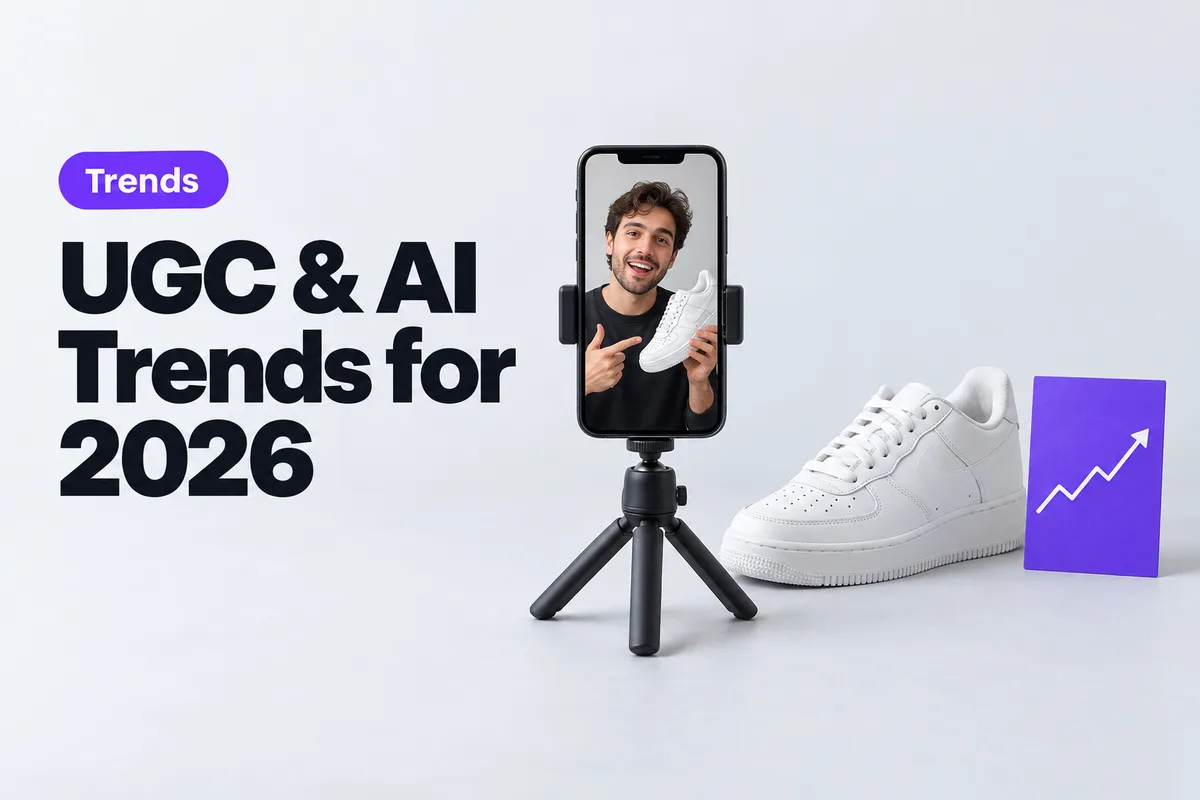
- Raw, phone-shot video still beats polished production for UGC. People trust content that looks like a real customer made it.
- Short vertical video is the default format. The first three seconds decide whether anyone watches the rest.
- AI now sits in the middle of the UGC workflow: finding customer content, drafting scripts, and producing creator-style ads when you don't have creators.
- UGC is moving onto product pages and into the buying decision, and brands need clear consent before they reuse anyone's content.
This guide merges our old posts on UGC trends, the future of UGC and AI in marketing. If you're new to the topic, start with what UGC is and how to get started.
1. Raw beats polished
Viewers skip anything that looks like an ad. A shaky phone video in natural light, with someone talking the way they actually talk, gets watched. A studio shoot with perfect lighting often gets scrolled past.
Here is what "authentic" looks like on screen. A woman holds up a drain unblocker and says, "My shower has been draining slow for three weeks, let's see if this does anything." That boring, real problem is more convincing than a model in a spotless bathroom. A review that says "the smell is strong, but it works" also beats a clean testimonial, because one small downside makes the praise easier to trust.
You get more of this by asking better questions. "Tell us what you love" gets generic praise. "What did you use before this, and why did you switch?" gets a story. Show the mixed reviews on your site too, instead of hiding them.
2. Short vertical video is the default
TikTok, Instagram Reels and YouTube Shorts all push short vertical video, and most UGC is now made for them. For a product video, 15 to 30 seconds in 9:16 is the safe starting point. Horizontal video looks out of place in these feeds.
The hook matters more than the rest of the clip. In the first three seconds you need movement, a surprising visual or a direct question, like "Why is nobody talking about this phone stand?" If the viewer hasn't stopped by then, the clever demo at second 20 doesn't matter.
The formats that work are familiar: unboxings and first reactions, problem-then-solution demos, before-and-after reveals, and short tutorials made by actual users. "Day in my life" clips work when the product appears naturally, like a water bottle that shows up at the gym, the desk and the car.
Each platform has its own habits. TikTok favors trending sounds, quick cuts and commentary. Reels rewards clean visuals with text overlays. Shorts works well for tips, tutorials and series. For concrete formats to try, see our UGC campaign ideas.
3. AI moves into the UGC workflow
AI isn't replacing customer content, but it now touches most steps around it. Social listening tools find brand mentions and flag the posts worth resharing, so nobody scrolls through thousands of tags by hand. Chat assistants draft hooks and creator briefs: ask for ten opening lines for a posture corrector aimed at remote workers, and two or three will be worth filming.
AI-generated creator ads
The biggest change is AI-generated UGC-style video: a virtual creator holding or talking about your product, made from a product photo and a script. It's how a small brand tests ten ad angles in a week without booking ten creators. One script leads with price, another with a pain point, a third with a quick demo, and you keep the winner.
With UGC Builder's UGC Video tool you upload one product photo and get a short, selfie-style video. The same credits also cover UGC photos, premium videos and product landing pages, and you can run everything from the website or from inside ChatGPT and Claude. Plans are monthly subscriptions starting at $9/month (see pricing). To compare options, we keep a list of the best AI tools for UGC videos.
There is a real limit. AI avatars are fine at talking to camera and holding a product, but weaker at close handling: squeezing a tube, applying makeup, snapping a case onto a phone. If the proof of your product is in the hands, film a real person for the demo and use AI video for hooks, angles and talking-head explainers.
A brand selling a premium product (about $100 average order) asked on r/ecommerce whether AI UGC works for Meta ads. One reply said price point decides it: AI UGC does fine for cheap impulse buys under about $30, and real creators win for considered purchases over about $200. It also said the script now gives AI ads away more than the visuals, so write scripts yourself or from real customer language.
"AI-generated copy sounds formulaic, even when the avatar looks real."
A commenter on r/ecommerce
If you're choosing which ad formats to test first, this video ranks UGC video types for Meta and TikTok in a tier list.
Keep people in charge
AI handles volume. People still own the brand voice, the cultural context and the idea behind a campaign. A tool won't know that a joke lands badly in one market. The final check before launch is a human job too.
A simple rule: use AI to amplify real customer moments and to test ideas faster, not to fake testimonials. A virtual creator saying "I've used this for six months" is a claim nobody made.
4. Platform rules on AI ads and disclosure
The big platforms now have rules for synthetic content. TikTok asks creators to label realistic AI-generated content, YouTube requires disclosure when realistic content is altered or generated, and Meta adds "AI info" labels to some AI-made media. These policies change often, so check each one before you launch.
Paid partnerships have their own rules. When a creator is paid or gets free product, most markets expect that to be disclosed, for example with #ad or the platform's paid-partnership label. In the US this comes from the FTC's endorsement guides. Put it in the creator brief so nobody forgets.
5. Interactive campaigns
Brands get more and better UGC when customers are asked to do something. A snack brand can let followers vote on the next flavor, then ask voters to film their first taste when it ships. A skincare brand can ask long-time customers to film a 30-second routine for beginners.
Start with one action that takes a minute. Reward everyone who joins, even with just a reshare or a discount code. Then show people how their votes or videos changed the product, because that is what brings them back next time.
6. One piece of UGC, many platforms
Good UGC rarely stays on one channel. Say a customer posts a 20-second TikTok organizing a small kitchen with your storage jars. You can cut a Reel from it, ask her for a longer YouTube walkthrough, pull stills for Pinterest and the product page, and run the original as a paid ad or in your post-purchase email.
Adapt each version instead of posting the same file everywhere. Pinterest rewards slower, save-for-later content like a clean before-and-after photo, while TikTok wants the fast, talky version.
7. Micro-creators, long-term deals and your own team
Smaller creators with a tight niche often get more trust from their audience than big accounts, and they cost less. Pick them for fit: a nurse with a few thousand followers who reviews work shoes is worth more to a shoe brand than a lifestyle account ten times her size. Build ongoing relationships instead of one-off posts.
Your own team is another source. Behind-the-scenes clips and support moments make a brand feel human. This works in B2B too: a customer's operations manager explaining on video how your software saved her team a weekly report is UGC, even if it never goes near TikTok.
8. UGC in the shopping experience
UGC is now part of the product page, next to the professional shots. A fashion shopper wants a fit video from someone with her build. A beauty shopper wants to see a shade on skin like hers. A home goods buyer wants a setup video that shows how long assembly really takes.
If you're launching a product and don't have a page yet, the UGC Builder landing page generator builds one from a single product photo.
9. Consent, usage rights and privacy
Reusing customer content without permission is a fast way to lose trust, and privacy rules like the GDPR apply to it too. Get explicit permission before any commercial use and say where the content will appear: an organic repost is not the same as a paid ad running for six months. Make removal easy, honor it quickly, and be clear up front about credit and payment.
With paid creators, put usage rights in the contract: which channels, whether the video can run as a paid ad, and for how long. If you want AI variations of a creator's footage, voice or face, ask for that separately and in writing. A creator who agreed to one TikTok did not agree to become an avatar.
10. Purpose-driven UGC
Campaigns tied to something customers care about, like sustainability or local community projects, give people a reason to post beyond the product. Only run them if the brand actually backs the cause.
For a refillable cleaning brand, the theme could be "how our product fits into your low-waste routine," with a short video or three-photo series as the ask. Run it in April around Earth Month, donate a fixed amount per valid submission, and publish the total at the end.
11. Measure quality, not just reach
Likes don't tell you much. Real questions in the comments, like "does it work on curly hair?", signal buying intent, while emoji-only reactions don't. Shares and saves relative to views show whether people found a video worth keeping.
The numbers that matter most sit closer to the sale. Compare conversion rate on product pages with and without UGC, and customer acquisition cost for UGC ads versus studio ads.
How to act on this in 2026
- Pick one short-form format and post it consistently for a month.
- Ask customers for specific, honest stories and get consent in writing.
- Use AI to find customer content and to test ad angles you can't film yet.
- Put real UGC on your best-selling product pages.
- Review the quality metrics above every month and drop what isn't working.
FAQ
What are the biggest UGC trends in 2026?
Raw, phone-shot short video, AI-generated creator-style ads, UGC on product pages and interactive campaigns. Underneath all of them is the same idea: content that looks like it came from a real person gets more trust than polished ads.
Is AI-generated UGC still "real" UGC?
Not in the strict sense, since no customer made it. It's best used for testing ad angles and filling gaps when you don't have creators, alongside real customer content. Disclose it where platforms or local rules require it.
What is the difference between a UGC creator and an influencer?
An influencer is paid mainly for access to their audience and posts on their own account. A UGC creator is paid for the content, which the brand posts on its own channels or runs as ads. Some people do both, so agree on which one you're paying for and on the usage rights.
How long should a UGC video be?
For most product ads, 15 to 30 seconds with a hook in the first three seconds. Tutorials and in-depth reviews can run longer on YouTube.
How much does it cost to make AI UGC videos?
It depends on the tool. UGC Builder uses monthly plans from $9/month for 100 credits, which is about 5 five-second videos or 25 images. Check each tool's pricing page, since prices change often.
- UGC
- UGC Trends
- AI Marketing
- Social Media
- Content Strategy