Campaign Ideas9 min read
5 UGC Campaign Ideas That Get Customers Posting in 2026
Five UGC campaign formats with example setups: before and after, product in action, customer spotlights, hashtag weeks and co-creation, plus launch steps.
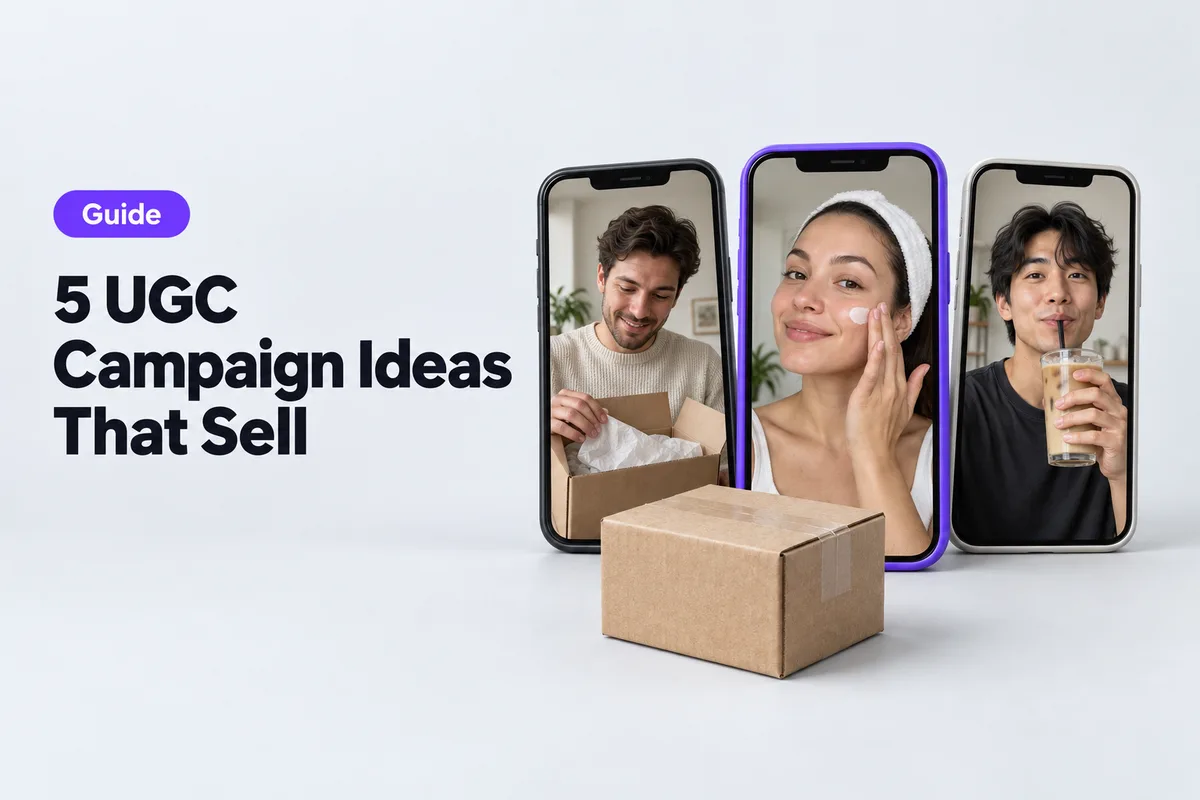
Short answer: the five formats below work for most consumer brands.
- Before and after: best for beauty, fitness, home and anything with a visible result.
- Product in action: a challenge around creative ways to use the product.
- Community spotlight: an ongoing series featuring one customer at a time.
- Hashtag week: a short, intense push around one branded hashtag.
- Co-creation: customers help design, name or vote on a product.
A UGC campaign is a structured way of asking customers to post about you. The idea is rarely the hard part. Making it easy to join, and worth someone's time, is. Each format below comes with a setup you can copy. If you're new to UGC, start with our beginner's guide to UGC.
1. The before and after challenge
People stop scrolling for a visible change. That makes this format a natural fit for fitness, skincare, cleaning products and home projects, where the result is the whole story.
The ask is small: a before photo, an after photo and a line about what changed. That might be 30 or 60 days of fitness progress, skin before and after a routine, or a closet before and after. Call it #MyTransformationTuesday and run it for 6 weeks. Entrants post before and after photos plus a short story. A weekly winner gets a $100 gift card, and the best story of the whole run wins a product bundle.
Give people a simple template, such as the same angle and the same light, so results are comparable. Repost the winner every Tuesday. And be careful with health and beauty claims: let customers describe their own results, and never retouch their photos.
2. The product in action challenge
Ask customers to show the product used in a clever or unexpected way. It works in almost any category, and you end up with a library of how-to clips you can reuse for months.
A kitchen brand can run a "30-second recipe" challenge, a scarf brand "one piece, three ways", and a productivity app a "desk setup" video. A simple version is #CreativeUsesChallenge over 4 weeks. Customers post a short video or a photo series showing a new way to use the product. Each month, the best entry gets a product bundle and a feature on your website.
Track entries, engagement and hashtag reach, but judge it on the site traffic and sales from campaign links. Those tell you whether it paid for itself.
3. The community spotlight series
Instead of a one-off push, run an ongoing program that features one customer at a time. It grows slower than a contest, but it builds loyalty and it never runs out of material.
People can get featured in several ways: a short form on your website, posts with your hashtag, nominations from other customers, or stories your support team hears in conversations. Support is often the best source: the customer who emailed to say your jacket survived a week of rain is already telling a story.
The feature can be a Stories takeover, a blog post, a short interview or a photo of the customer with the product. A fitness brand might run #FitFamFriday, featuring one member's story each month as a Reel, a blog post and an email feature. Featured members get free products and early access to new releases, and anyone can apply through a monthly form.
4. The hashtag week
Pick one branded hashtag and push it hard for a short, fixed period. The deadline gives people a reason to post now instead of "later", which usually means never.
For a well-known example of a brand campaign built on one hashtag, this case study walks through Apple's Shot on iPhone.
Announce it two weeks before, with a couple of example posts and rules short enough to fit in one caption. During launch week, feature the best posts daily and reply to every entry. The week after, announce winners and post a "best of" compilation.
For example, #MyBrandMoment asks people to share their favourite moment with the product. Set a target based on your audience size, start modest and treat the first one as a test. Offer small daily prizes, one bigger weekly prize and a discount code for everyone who takes part. Don't launch into silence: an empty hashtag feed tells visitors nobody else is playing.
5. The co-creation campaign
This one goes further: you make something with your customers. That can be a vote on a new colour, flavour or scent, a naming contest for the next product, customer-written tutorials, or a shared charity project.
A "Design with us" campaign for a candle brand might look like this. For two weeks, customers submit scent ideas through a form and on social media. For one week, the community votes on a shortlist. Over the next four to six weeks, the winning scent is produced as a limited edition. At launch, the winner gets the first candle and is credited on the product page.
The payoff is built-in demand. People who voted want to see the result, and the process gives you weeks of content along the way.
The thing you make together doesn't have to be a physical product. In an r/marketing thread about marketing stunts, someone who ran social for a global sporting goods company described a contest built around a sponsored athlete who also raps. He released a track, and people recorded a freestyle verse over it and posted the video on Instagram for a chance to appear on his SoundCloud track.
"In a week we had 100 people (some with 10-25k followers on social) rapping for over 45 seconds about our brand and campaign for a spot on a track on his soundcloud. It cost us nothing than we had already paid. All the UGC was free."
A commenter on r/marketing
Filling the gaps with AI-made UGC
Real customer content takes time to build up. While a campaign gets going, you can use AI to make UGC-style photos and videos for ads, so you're not waiting on submissions to test angles. In UGC Builder you upload a product photo and generate UGC videos of people reviewing or unboxing it; our step-by-step guide covers the process. Plans start at $9/month for 100 credits (pricing), and a 5-second UGC video costs 20 credits, so the starter plan covers about five short clips a month.
AI avatars have limits. They can talk about a product and hold it up, but they can't show a real skin result after 60 days or a real pan after a year of use. Use them to test hooks such as "I stopped buying paper towels after this", then put your budget behind whichever real customer posts prove the same angle. And keep it honest: never present AI-made content as a real customer's post.
Rights, disclosure and ads
Getting permission is the step most brands rush. Say in the rules how entries may be used: reposts, your website, paid ads, or all three. Before running anything as an ad, get written permission and keep a record; a "yes" in the comments is weak evidence if the post is later deleted.
Disclosure matters too. In the US, the FTC expects people to disclose when they post in exchange for something of value, and a contest entry or free product counts (FTC guidance for influencers). A #contest or #ad tag in the entry rules solves most of this. Also check the audio: a trending song that's fine in an organic post may not be licensed for use in an ad.
Running the campaign
The steps before launch are the ones people skip, so here they are in order:
- Write down one clear goal and how you'll measure it.
- Decide what would actually motivate your customers to post.
- Write short rules, including how you'll use the content.
- Line up day-one posts from your team and a few loyal customers.
- Decide who on your team replies to entries.
Once it's live, reply to every entry, share progress updates and watch the hashtag and mentions daily. If entries are slow after three or four days, the ask is usually too hard. Cut it down, say from a 30-second video to a single photo, rather than raising the prize. If entries are weak, post a good example yourself and point to it. When it ends, thank everyone publicly, share the results and keep your most active participants close; they are the first people to invite next time.
You don't need much tooling. Buffer, Later or Hootsuite handle scheduling, and Sprout Social or Brand24 catch mentions you'd miss. Put UTM tags on every campaign link so Google Analytics shows traffic and sales, and use a review or UGC gallery app that works with your store to collect entries.
For where UGC is heading next, including AI-made content, see our UGC and AI trends for 2026.
FAQ
How long should a UGC campaign run?
Short pushes like a hashtag week work best at one to two weeks. Challenges usually run four to six weeks, and spotlight series can run indefinitely.
Do I need to offer prizes?
Not always, but a reward helps. A feature on your account, a discount or early access often works as well as cash prizes for small brands.
Can I use campaign entries in ads?
Only with clear permission from the creator. Ask for it in writing and keep a record, and say in the campaign rules how entries may be used.
What's the difference between UGC and influencer marketing?
A UGC campaign asks real customers to post for free or for a prize. Hired UGC creators are paid to film a review-style video, usually for ads, and you pay for the video itself. Influencer marketing pays for access to someone's audience, so the post matters mostly because of who shares it.
How do I get customers to submit content?
Make the ask small, give an example and set a deadline. Asking right after delivery, with an insert in the box or a follow-up email a few days later, catches people when they're most excited about the product.
- UGC
- Campaigns
- Social Media
- Engagement
- Marketing